Book Now
 Call Us
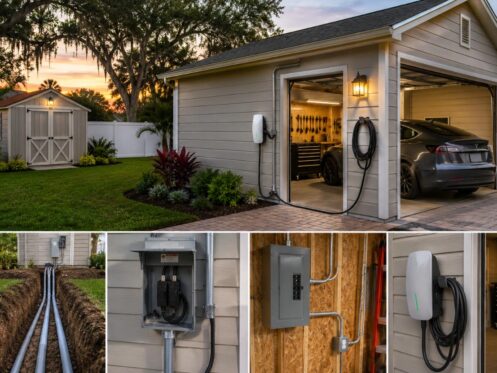
If you’re planning to charge an electric vehicle from a detached garage or backyard workshop, your electrical system needs more than just a convenient outlet. Many homeowners in Winter Haven and Lakeland are discovering that older detached structures were never designed to support the continuous electrical demand of Level 2 EV chargers, especially during periods of heavier winter driving.
Quick Answer
Running power to a detached garage or shed for EV charging usually requires a dedicated circuit, the correct wire size, proper trenching, grounding, and compliance with current electrical codes. In the Winter Haven area, homeowners should also consider future electrical needs, local permitting requirements, and whether the existing service panel has enough available capacity before installing an EV charger.
What Local Readers Should Know
-
Most Level 2 EV chargers require a dedicated 240-volt circuit installed specifically for EV charging.
-
Many detached garages in Polk County were originally wired only for lighting and basic outlets, making upgrades necessary.
-
Florida’s sandy soil and seasonal rain patterns affect underground conduit installation and long-term durability.
-
Homeowners planning future workshops, mini-splits, or storage buildings should size electrical service with expansion in mind.
-
Electrical permits and inspections help ensure the installation meets current National Electrical Code requirements adopted locally.
Why This Matters Locally
Electric vehicle ownership continues to grow throughout Central Florida, and many homeowners in Winter Haven, Lakeland, Auburndale, Haines City, Bartow, and Lake Alfred are looking for convenient home charging solutions. Detached garages are common throughout established neighborhoods and rural properties across Polk County, but many were built decades before EV charging became a consideration.
Top Flight Electric serves homeowners throughout the area with electrical installations designed around today’s electrical demands while planning for tomorrow’s needs. After this introduction, we’ll refer to ourselves simply as we because our focus is helping local property owners understand their options.
Local Data and Field Observations
Professional field observations show that many detached garages throughout Central Florida still operate from small subpanels or limited branch circuits intended for lighting, garage door openers, and a handful of receptacles. As more homeowners purchase electric vehicles, these existing electrical systems often need significant upgrades before they can safely support continuous EV charging loads.
Winter also brings more comfortable temperatures that encourage additional driving throughout the region. Holiday travel, day trips to nearby attractions, and increased seasonal visitors can all increase charging frequency during the cooler months.
Local Impact
Installing the correct electrical infrastructure provides more than convenient charging.
A properly designed circuit helps:
-
Reduce charging times compared to standard household outlets.
-
Support consistent overnight charging.
-
Minimize nuisance breaker trips.
-
Protect wiring from overheating.
-
Prepare the property for future electrical upgrades.
-
Improve convenience for households with multiple drivers.
Whether your home sits near Lake Howard, Lake Hollingsworth, Downtown Lakeland, or a rural property outside Winter Haven, dependable home charging makes EV ownership significantly easier.
Warning Signs Your Detached Garage May Need an Electrical Upgrade
Several indicators suggest your detached structure may not be ready for an EV charger.
-
The garage only has one or two standard outlets.
-
Lights dim when larger tools start.
-
The electrical panel is completely full.
-
The detached building still uses an older fuse panel.
-
Extension cords are commonly used throughout the garage.
-
Breakers trip when multiple tools operate simultaneously.
-
The garage has no existing 240-volt circuits.
Any of these conditions should be evaluated before installing EV charging equipment.
When to Call a Professional
Installing power for EV charging requires more than running a new wire underground.
A licensed electrician should evaluate:
-
Main service capacity.
-
Panel space.
-
Load calculations.
-
Underground conduit routing.
-
Grounding and bonding requirements.
-
Future electrical expansion opportunities.
-
Local permitting requirements.
Homeowners can safely determine where they’d like the charger located, but service sizing, circuit installation, and final connections should be completed by a qualified professional.
Common Local Causes of Electrical Upgrades
Several factors commonly lead homeowners to upgrade detached garage power.
1. Older Detached Garages
Many garages built years ago were never intended for electric vehicle charging.
2. Limited Subpanel Capacity
Existing subpanels often provide enough power for lights and outlets but not continuous 240-volt charging.
3. Future Expansion Plans
Many homeowners eventually add:
-
Air conditioning
-
Workshop equipment
-
Air compressors
-
Welders
-
Home gyms
-
Outdoor kitchens
Planning ahead often avoids paying for another trench and electrical upgrade later.
4. Increased Household Electrical Demand
Adding an EV is one more major electrical load alongside HVAC equipment, electric water heaters, pools, and kitchen appliances.
Prevention and Maintenance
Planning before installation can save both time and money.
Helpful recommendations include:
-
Install conduit large enough for future wiring.
-
Leave room in the panel for expansion.
-
Choose a charger location that protects equipment from weather.
-
Have underground wiring installed to current code standards.
-
Schedule periodic inspections if the detached building experiences flooding or storm damage.
Central Florida’s frequent thunderstorms make proper grounding and surge protection valuable considerations as well.
Expected Results
A professionally designed installation typically provides:
-
Reliable overnight charging.
-
Faster charging compared to standard outlets.
-
Dedicated electrical protection.
-
Capacity for future upgrades.
-
Improved convenience.
-
Compliance with current electrical codes.
Actual charging speeds depend on the vehicle, charger rating, and available electrical service.
Common Mistakes
Mistake: Using an Existing Dryer or Welder Circuit
Consequence: Shared circuits can overload electrical equipment or violate code requirements.
Better Approach: Install a dedicated EV charging circuit.
Mistake: Undersizing the Electrical Feed
Consequence: Future upgrades require another trench and additional labor.
Better Approach: Consider future electrical needs during the initial installation.
Mistake: Skipping Permits
Consequence: Improper installations may create safety concerns and complicate future home sales.
Better Approach: Follow local permitting and inspection requirements.
Common Local Scenario
A homeowner in the Winter Haven area purchases a new electric vehicle after previously using the detached garage only for storage and lawn equipment. The garage has lighting and a few outlets but no 240-volt service. After evaluating the home’s electrical capacity, a new underground feeder and subpanel provide dedicated EV charging while leaving room for future workshop equipment.
Situations like this are becoming increasingly common throughout Polk County.
Related Service Solutions
Depending on the property, several electrical services may support an EV charging installation:
-
EV charger installation.
-
Electrical panel upgrades.
-
Subpanel installation.
-
Underground electrical service.
-
Whole-home surge protection.
-
Dedicated 240-volt circuits.
-
Garage electrical remodeling.
Comparing Your Options
| Option | Advantages | Considerations |
|---|---|---|
| Standard 120V Outlet | Lowest initial cost | Slow charging speeds |
| Level 2 Charger on Existing Garage Circuit | May work in limited situations | Existing wiring often lacks sufficient capacity |
| New Dedicated Circuit | Faster charging and improved safety | Requires professional installation |
| New Subpanel with Future Capacity | Supports EV charging plus future additions | Higher initial investment with long-term flexibility |
Service Areas
We proudly serve homeowners throughout Winter Haven, Lakeland, Auburndale, Bartow, Haines City, Lake Alfred, Eagle Lake, and surrounding Polk County communities with residential electrical upgrades for modern homes and detached structures.
Cost of Ignoring the Issue
Waiting to upgrade an undersized electrical system can lead to recurring breaker trips, charging delays, limited expansion options, and potentially more expensive upgrades later if additional electrical work becomes necessary.
Frequently Asked Questions
Do I need a permit to install EV charging in Winter Haven?
Yes. Most permanent EV charging installations require permits and inspections to verify the work complies with applicable electrical codes adopted by the local jurisdiction.
Can my detached garage support a Level 2 charger?
Maybe. The answer depends on your existing electrical service, available panel capacity, and the wiring already serving the detached structure.
Is underground wiring required between the house and garage?
Usually. Detached garages commonly receive power through underground conduit, although installation methods depend on the property layout and local code requirements.
How long does it take to install garage power for EV charging?
Most installations can be completed within one or more days depending on trenching, panel upgrades, permitting, and inspection scheduling.
Should I install a larger electrical feed for future upgrades?
Yes. Planning for future electrical needs often saves money by avoiding additional trenching and rewiring later.
Does Florida weather affect underground electrical installations?
Yes. Heavy rainfall, lightning activity, and sandy soil conditions make proper conduit installation, grounding, and weather-resistant equipment especially important throughout Polk County.
Can I charge multiple EVs from one detached garage?
Yes, in many cases. The electrical service must be properly designed to support the anticipated charging demand and any other equipment operating in the building.
Should I upgrade my main electrical panel before adding EV charging?
Sometimes. If the existing panel lacks sufficient capacity or available breaker space, a panel upgrade may be recommended before installing the charger.
Closing
As electric vehicles become more common throughout Winter Haven, Lakeland, and the surrounding Polk County communities, properly powering detached garages and sheds is becoming an increasingly valuable home improvement. Planning the electrical installation correctly today can provide safer charging, greater convenience, and flexibility for future projects.
Power Your Detached Garage with Confidence
Whether you’re preparing for your first electric vehicle or expanding your home’s electrical capabilities, we’re here to help you find a safe, code-compliant solution designed for your property.