Book Now
 Call Us
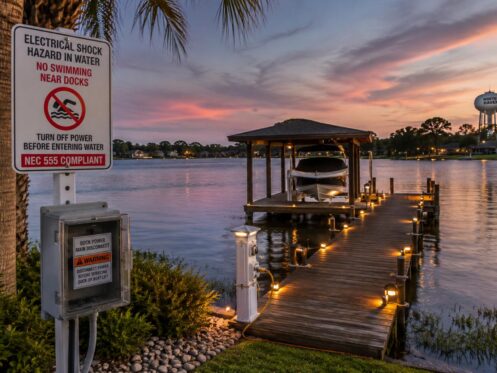
Living on one of the many lakes in the Lakeland and Winter Haven area offers easy access to boating, fishing, and waterfront recreation. However, docks, boat lifts, and shoreline electrical systems introduce unique safety concerns that every waterfront property owner should understand. Proper marine electrical installations are not just about convenience. They are essential for protecting people from electric shock and helping waterfront systems comply with current electrical safety standards.
Quick Answer
Preventing dock electrocution starts with installing and maintaining marine electrical systems that comply with the National Electrical Code (NEC), including Article 555 for marinas and docking facilities where applicable. Waterfront electrical equipment should include proper grounding, Ground Fault Protection, corrosion-resistant components, and routine inspections. For lakefront properties around Lakeland and Winter Haven, regular maintenance is especially important because Florida’s heat, humidity, storms, and constant exposure to water accelerate electrical wear.
What Local Readers Should Know
-
Electrical current can enter lake water from damaged wiring, faulty boat lifts, or improperly installed dock equipment, creating a serious safety hazard.
-
Polk County’s frequent thunderstorms and heavy summer rainfall can damage waterfront electrical equipment over time.
-
Older lakefront homes around Winter Haven and Lakeland may have electrical systems that predate modern marine electrical code requirements.
-
Routine inspections help identify corrosion, deteriorated wiring, and failed safety devices before they become dangerous.
-
Boat docks, seawalls, boat lifts, and shoreline lighting all require specialized electrical design that differs from standard residential wiring.
Why This Matters Locally
Lakefront living is common throughout Winter Haven, Lakeland, Lake Eloise, Lake Howard, Lake Jessie, Lake Hollingsworth, and many communities connected by the Chain of Lakes. Waterfront electrical systems remain exposed to moisture year-round, while Florida’s intense UV exposure, afternoon thunderstorms, and seasonal hurricanes increase wear on electrical equipment.
Top Flight Electric serves property owners throughout the Winter Haven area, and we regularly see how aging dock wiring, damaged conduit, and outdated safety equipment can create unnecessary risks for homeowners enjoying Central Florida’s waterfront lifestyle.
Local Data and Field Observations
According to the National Fire Protection Association, the National Electrical Code is updated every three years to improve electrical safety, including marine electrical requirements. Florida jurisdictions adopt editions of the NEC through the Florida Building Code, making compliance especially important during new installations, renovations, and electrical upgrades.
From our field experience throughout Polk County, waterfront electrical systems often show accelerated deterioration because of continuous moisture exposure, heat, and corrosion. Boat lift motors, dock receptacles, shoreline lighting, and electrical panels require more frequent inspections than comparable inland electrical systems.
Local Impact
Electrical problems on waterfront properties affect more than convenience.
Unsafe dock wiring may prevent safe use of boat lifts, lighting, irrigation pumps, and shoreline amenities. Small electrical faults can become expensive repairs if corrosion spreads into conduit, junction boxes, or electrical panels. Most importantly, improperly maintained dock electrical systems increase the potential for electric shock hazards around swimmers and boaters.
Warning Signs Your Dock Electrical System Needs Attention
Electrical issues often develop gradually before becoming dangerous. Watch for these warning signs:
-
Circuit breakers trip when dock equipment operates.
-
Boat lift motors hesitate or operate inconsistently.
-
Exterior electrical outlets show rust, corrosion, or cracked covers.
-
Lighting flickers around the dock.
-
Electrical boxes collect moisture after rain.
-
Extension cords are being used as permanent dock wiring.
-
Wiring insulation appears cracked, brittle, or damaged.
-
Any tingling sensation is ever felt while touching metal dock components or while in the water near electrical equipment.
When to Call a Professional
Routine visual inspections by property owners are helpful, but electrical testing around water should always be performed by a qualified electrician.
Homeowners can safely:
-
Check outlet covers for visible damage.
-
Look for exposed wiring.
-
Verify that weatherproof covers close properly.
-
Remove vegetation blocking electrical equipment.
Professional service is recommended whenever:
-
Breakers repeatedly trip.
-
Electrical equipment has been submerged.
-
Boat lift wiring requires repair.
-
New dock lighting or outlets are being added.
-
A waterfront property is being purchased.
-
Electrical equipment shows signs of corrosion.
Common Local Causes of Dock Electrical Problems
1. Moisture Intrusion
Florida’s humidity and frequent rainfall allow moisture to penetrate aging electrical enclosures.
2. Corrosion
Lake environments accelerate corrosion on connectors, conduit fittings, terminals, and outdoor electrical devices.
3. Storm Damage
Lightning, wind, and hurricane activity can loosen wiring, damage equipment, and introduce hidden electrical faults.
4. Aging Installations
Many waterfront homes around Winter Haven and Lakeland were built before current electrical safety requirements were adopted.
5. Improper DIY Repairs
Using indoor electrical components outdoors or bypassing protective devices creates significant safety concerns.
Prevention and Maintenance
Preventive maintenance dramatically improves both safety and equipment longevity.
Recommended maintenance includes:
-
Schedule periodic electrical inspections.
-
Test Ground Fault Protection devices according to manufacturer recommendations.
-
Replace cracked outlet covers promptly.
-
Keep electrical panels free from standing water.
-
Upgrade deteriorated wiring using marine-rated materials when necessary.
-
Inspect dock electrical equipment after major storms.
-
Replace rusted conduit and damaged junction boxes before failure occurs.
Expected Results
A properly maintained dock electrical system provides reliable operation for boat lifts, lighting, pumps, and other waterfront equipment while reducing the likelihood of electrical failures and helping maintain compliance with current safety standards. Although no system can eliminate every risk, routine inspections and timely repairs significantly improve overall electrical safety.
Common Mistakes
Mistake: Using standard residential outlets on a dock.
Consequence: Increased moisture intrusion and electrical failure.
Better Approach: Install weather-resistant equipment designed for marine environments.
Mistake: Ignoring minor breaker trips.
Consequence: Small electrical faults may worsen over time.
Better Approach: Have recurring electrical issues professionally diagnosed.
Mistake: Delaying replacement of corroded components.
Consequence: Corrosion spreads and damages additional equipment.
Better Approach: Replace deteriorated parts before they affect the entire system.
Mistake: Performing unpermitted electrical modifications.
Consequence: Work may not meet current code requirements.
Better Approach: Use a licensed electrician familiar with waterfront electrical installations.
Common Local Scenario
A homeowner purchases an older lakefront property on one of the Winter Haven Chain of Lakes. The dock lighting works intermittently, and the boat lift occasionally trips the breaker. During an inspection, deteriorated conduit, corroded electrical connections, and outdated protective devices are discovered. Replacing damaged components and updating the electrical system restores reliable operation while improving overall safety.
Related Service Solutions
Marine electrical safety often involves more than a single repair.
Services that may help include:
-
Dock electrical inspections
-
Boat lift electrical wiring
-
Outdoor electrical upgrades
-
Ground Fault Protection installation
-
Electrical panel upgrades
-
Surge protection
-
Exterior lighting installation
-
Whole-property electrical safety inspections
Comparing Your Options
| Option | Advantages | Limitations |
|---|---|---|
| DIY visual inspection | Identifies obvious damage | Cannot safely test electrical systems |
| Individual repairs | Addresses isolated problems | May not uncover hidden hazards |
| Comprehensive electrical inspection | Evaluates the complete system | Requires a qualified electrician |
| Complete system upgrade | Brings older installations closer to current standards | Higher upfront investment |
Service Areas
We proudly serve waterfront homeowners throughout Winter Haven, Lakeland, Auburndale, Lake Alfred, Eagle Lake, Bartow, Haines City, and surrounding communities across Polk County. Whether your property sits on the Chain of Lakes or another Central Florida waterfront, we help keep marine electrical systems operating safely.
Cost of Ignoring the Issue
Delaying dock electrical repairs can allow minor problems to become major system failures. Corrosion, damaged wiring, and deteriorating safety devices often worsen with each rainy season. Addressing concerns early may help reduce repair costs while improving safety for everyone using the waterfront.
Frequently Asked Questions
Does my dock in Winter Haven need Ground Fault Protection?
Yes. Ground Fault Protection is an important safety feature for waterfront electrical systems and is required in many applications under current electrical codes. A qualified electrician can determine what applies to your specific installation.
How often should dock electrical systems be inspected in Lakeland?
Most waterfront properties benefit from periodic inspections, especially after severe storms or if the system is older. Florida’s climate accelerates wear on outdoor electrical equipment.
Are older Polk County lake homes more likely to need electrical upgrades?
Yes. Many older waterfront properties were built before today’s electrical safety requirements and may benefit from updated protective devices or replacement of aging components.
Can corrosion damage electrical wiring near Florida lakes?
Yes. Moisture and exposure to outdoor conditions contribute to corrosion that can affect terminals, conduit, breakers, and electrical connections over time.
Is it safe to swim near docks with electrical equipment?
Swimming near energized docks should always be approached with caution. Any suspected electrical problem should be investigated immediately by a qualified electrician before the area is used.
Does boat lift wiring require specialized installation?
Yes. Boat lifts operate in demanding environments where proper wiring methods, equipment selection, and protective devices are especially important for safety and reliability.
Closing
Waterfront living should be enjoyable, not stressful. Keeping dock electrical systems properly maintained helps protect your family, your property, and everyone enjoying Central Florida’s lakes. Regular inspections and code-compliant installations are among the best investments you can make in long-term waterfront safety.
Protect Your Lakefront Property with Safe Marine Electrical Solutions
Whether you’re upgrading an older dock or maintaining a newer waterfront electrical system, we’re here to help you make informed decisions that prioritize safety and reliability.